
Hygienic Mixing Challenges for High-Viscosity Materials and Sanitary Design Standards
Jam and fruit fillings are typical high‑viscosity, high‑sugar, high‑acidity food systems. Products such as strawberry jam, blueberry jam, and apple filling have high solid content, with sugar levels typically around 60–70°Brix and pH values as low as 2.8–3.5, making them highly corrosive. In such demanding processing environments, achieving uniform mixing, heating/concentration, and hygienic safety is the core challenge in the production process.
High‑viscosity materials present multiple difficulties during mixing. First, jam viscosity can reach tens of thousands or even hundreds of thousands of centipoise; conventional agitators struggle to create effective convective circulation within the tank, often resulting in slow movement near the wall and over‑mixing in the central zone. Second, high‑sugar materials are prone to forming a caramelised layer on the tank wall during heating, which not only reduces heat transfer efficiency but also degrades product colour and flavour. Third, jams often contain whole fruits or fruit pieces, requiring care to avoid over‑shearing that would damage the fruit texture.
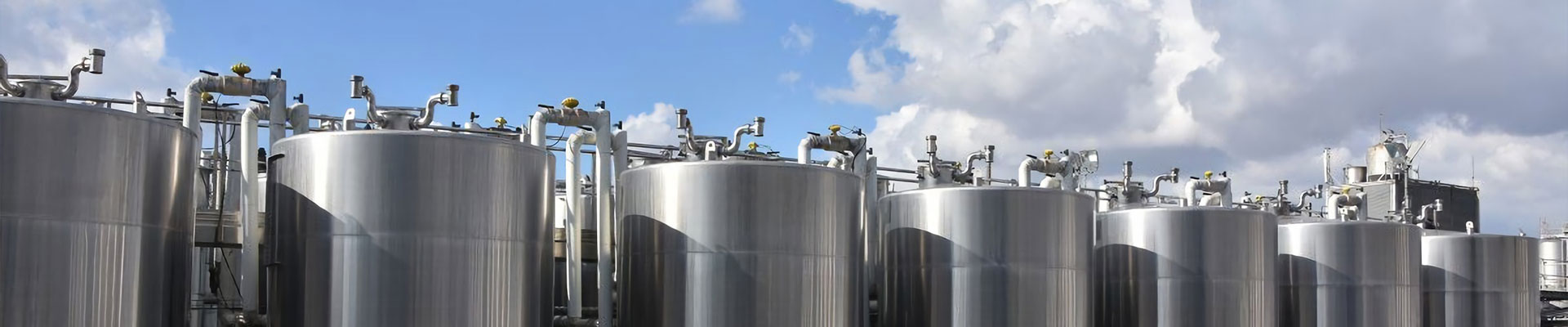
Sanitary design stainless steel mixing tanks are engineered precisely to address these processing challenges of high‑viscosity materials. The tank is constructed from SUS304 or SUS316L stainless steel, with 316L offering superior corrosion resistance in chloride‑containing environments typical of high‑acidity jams. The internal surface is precision‑polished to a surface roughness of Ra ≤ 0.28μm, meeting stringent GMP and FDA sanitary standards. The tank is fully welded by automatic argon arc welding, with arc‑transition corners on the interior walls to eliminate sanitary dead corners.
For the agitation system, high‑viscosity jam mixing tanks are typically equipped with scraped‑surface agitators or planetary mixing systems. Planetary mixers feature 2–3 stirring paddles that rotate around the centre of the vessel while each paddle spins at high speed on its own axis, capable of handling ultra‑high‑viscosity materials up to 50,000 centipoise. The scraper of a scraped‑surface agitator moves closely against the tank wall, continuously removing adhered material – this not only increases heat transfer efficiency by 30–40% but, more importantly, prevents local overheating that causes scorching or degradation. For extreme high‑viscosity products up to 2,000,000 centipoise, heavy‑duty inclined double‑motion scraped‑surface agitators are also available.
Sanitary design is also reflected in cleanability. The equipment supports CIP (Clean‑in‑Place) and SIP (Sterilise‑in‑Place, 121°C/0.1MPa), enabling complete tank cleaning and sterilisation without disassembly. The tank bottom features a cone or dish design with full‑bore discharge valves, ensuring complete drainage with no liquid pooling.
Post time: Aug-10-2026